January 28, 2026
The Power of Creativity in the Age of AI: A Call to Reclaim Your Point of View
AI can generate endless content, but it cannot originate a point of view. As production becomes effortless, distinctive creativity becomes the scarce asset — and scarcity creates value. The brands that invest in a real creative point of view will be the ones people remember.
Historically, you don't think "Advertising. Now, there's a noble profession!" But what if it could be?
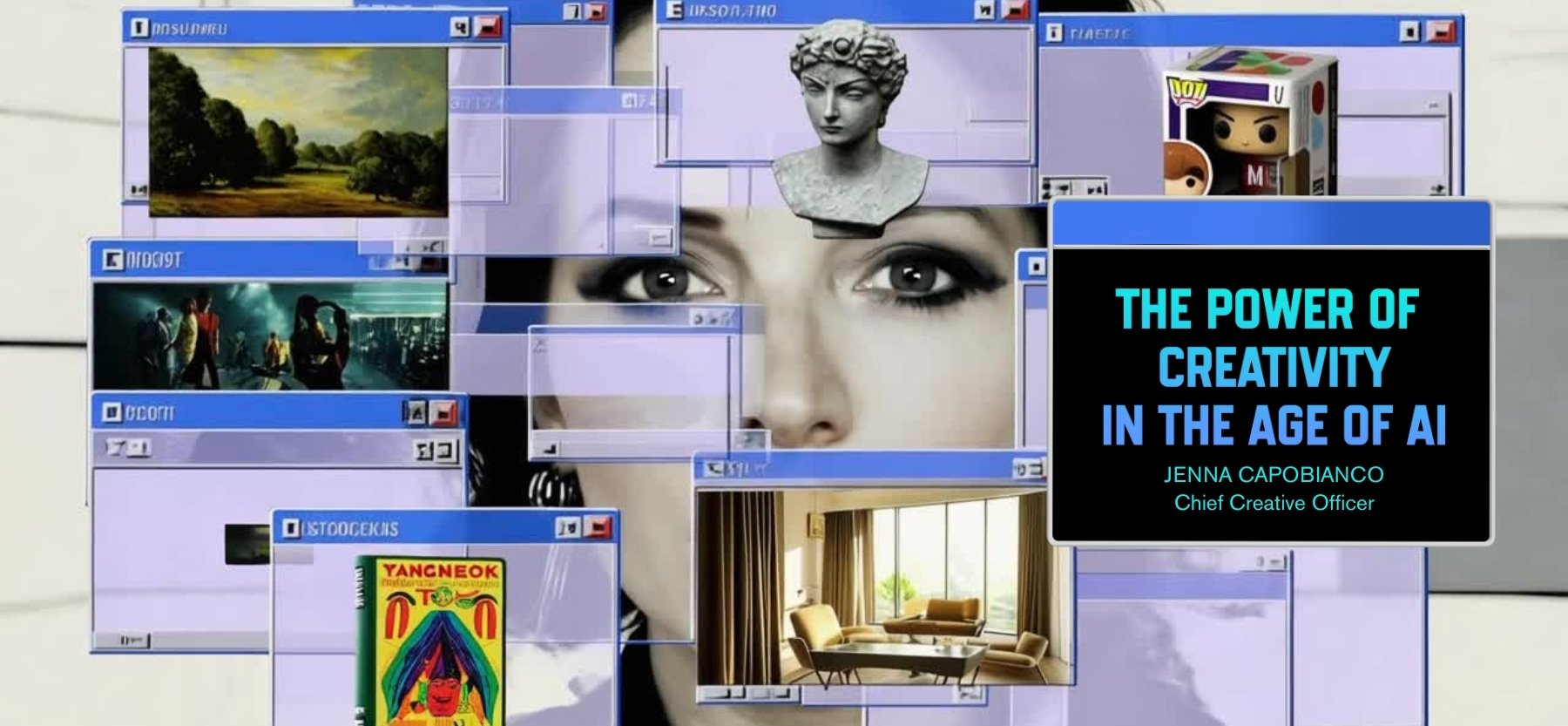
In a recent presentation, Jenna Capobianco, Milesbrand's Chief Creative Officer, shared a perspective that challenges how we think about creativity in advertising. Drawing on her 20 years in the industry working at agencies from New York to London and Amsterdam to San Francisco, and on global accounts from Starbucks to Nike and Amazon to Oakley, Jenna explored how creativity can be a force for good in the world and why that matters more than ever as artificial intelligence reshapes our industry.
The foundation of her philosophy comes from grad school, where one of her professors, who worked on some of Nike's most famous campaigns, taught a powerful lesson: if creatives have the power to speak to tens of millions of people around the world, they need to use those powers for good. They should create cultural wallpaper that they're proud of.
As creatives, we have superpowers. We can influence how people spend their money, which companies they support and most importantly, how they see themselves and each other. The belief at the heart of Jenna's work is simple but profound: creativity can change the world.
Now, as Milesbrand's Chief Creative Officer working as a brand architect in new home construction, Jenna collaborates with architects, land planners, builders, developers and other creative visionaries to apply these principles to how we build communities and shape the places people call home.
But we're standing at an inflection point. Artificial intelligence is fundamentally changing how creativity works in advertising. The question isn't whether AI will transform our industry. It's whether we'll use it to amplify the best of human creativity or lose what makes our work meaningful in the first place.
The Power of Creative Choices
Creating cultural wallpaper means paying attention to the impact of dozens of small decisions made every time we work with a client. For homebuilding, we ask questions such as: Who is the ideal homebuyer? What does the product look like? Where is the community located? How does the builder want to be portrayed?
These choices matter because they shape culture.
Consider Ralph Lauren's campaigns featuring the historic Oak Bluffs community on Martha's Vineyard, showcasing Black excellence and legacy in a space that has long been significant to African American culture. Or Adidas partnering with Havas Middle East to build a female-inspired glow-in-the-dark basketball court in Dubai, featuring poet and athlete Asma Elbadawi who said, "Growing up, I didn't see Muslim women on billboards and TV. How do you dream bigger without seeing someone who looks like you accomplish things?"
Elbadawi's impact went beyond creative campaigns. She successfully overturned a ban on religious headgear by the International Basketball Federation. That's the power of representation in advertising done right.
The greatest campaigns hit hard because they show us possibilities we hadn't considered. Nike's "If You Let Me Play" campaign showed young girls the power of sports. "What Will They Say About You?" challenged cultural stereotypes about women in the Middle East. LeBron's "Together" reminded us that community matters more than individual achievement. Heineken's "Open Your World" literally brought people with opposing political views together over a beer.
These campaigns worked because they used creativity to influence behavior and change the world for the better. But creativity can also be wielded negatively: promoting overconsumption, spreading stereotypes, reinforcing negative body images. The responsibility lies with us as creators.
The AI Revolution: What's Coming and What It Means
We're approaching what futurists call the Singularity, the hypothetical point at which AI surpasses human intelligence in a way that is irreversible and exponential. While popularizers like Ray Kurzweil predict this could occur around 2045, we don't need to wait decades to see AI fundamentally reshape advertising.
We're already witnessing the start of a shift from reactive to predictive and personalized marketing. Today, marketers respond to customer inquiries after they occur. Soon, brands will anticipate customer needs before they express them, tailoring experiences to individual preferences and life stages with unprecedented precision.
How AI Is Changing Advertising Today
Hyper-Personalization: AI analyzes massive datasets including behavior, demographics and browsing patterns to create ads tailored almost perfectly to individuals. This means higher engagement, more conversions and less wasted ad spend.
Creative Efficiency: Generative AI tools can instantly produce ad copy, visuals, video and audio variations. This allows brands to test multiple concepts quickly, lowering costs and speeding up campaigns.
Predictive Insights: Instead of only reacting to what audiences have done, AI forecasts trends and consumer behavior, helping advertisers stay ahead of the curve.
Accessibility for Smaller Brands: Low-cost AI creative and analytics tools lower barriers for startups and small businesses, allowing them to compete with larger players more effectively.
AI will unleash creativity in ways we've never seen before. Production capabilities that once required massive budgets and crews are now accessible to smaller companies and individuals. This democratization of creativity is already producing remarkable work.
Creative Trends Enabled by AI
Vibe Marketing: A new wave where ads are built around emotion, mood or cultural resonance, skipping the typical data-first mindset. AI enables instant ideation and output based on feeling rather than just metrics.
Democratizing Creativity: AI tools lower the barrier to creative marketing, enabling smaller teams or emerging brands to execute bold campaigns that feel innovative and human-centered.
Speed and Flexibility: From rapid production cycles to low-cost yet high-visibility campaigns, AI drastically compresses timelines and budgets. What once took weeks can now happen in days or hours.
The Dark Side: What We Risk Losing
But this transformation comes with serious risks we must confront honestly.
Data Privacy Concerns: Personalization relies on data, and consumers and regulators are increasingly wary, and rightfully so. The line between helpful and invasive is thin and easily crossed.
Creative Homogenization: With so many brands relying on the same AI tools, ads risk feeling formulaic. ChatGPT copy is already ubiquitous and recognizable. When everyone uses the same tools with the same prompts, differentiation disappears.
Algorithmic Bias: AI models trained on biased data reinforce stereotypes or exclude certain demographics. The same technology that could expand representation could just as easily narrow it if we're not vigilant.
Consumer Fatigue and Distrust: Audiences may feel overwhelmed or manipulated by hyper-targeted ads. If people perceive ads as creepy or invasive, it damages brand trust in ways that are hard to repair.
Job Displacement: The reality is that AI will displace jobs. Actors, extras, copywriters, art directors, graphic designers, production assistants, media planners, market researchers, storyboard artists, video editors, voiceover talent, animators, production crews, set designers, makeup artists and wardrobe designers all face uncertain futures as AI capabilities expand.
But displacement doesn't mean elimination. New roles are emerging that didn't exist five years ago: AI Prompt Strategists, Synthetic Media Curators, Ethics and Compliance Consultants, AI Story Architects, Virtual Production Managers, Emotion Designers, Campaign Worldbuilders, AI Brand Guardians and Human-AI Collaboration Coaches. The question is whether the industry is training people for these emerging roles or leaving them behind.
What This Means for Creativity
The strongest creative results come when AI accelerates human-led ideas, not replaces them. Human creativity plus AI can equal magic, but only when we maintain the right relationship between the two.
Humans bring the soul, taste and strategy.
AI brings scale, speed and surprise.
Together, they unlock campaigns and stories that were impossible before. An ad universe personalized for millions. A film where viewers can literally co-star with their younger selves. Campaigns that respond to cultural moments in real time with production quality that once required months of planning.
But here's what AI cannot do: it cannot bring a unique point of view shaped by a lifetime of influences, experiences and accumulated taste. It cannot make the courageous creative choices that break through because they come from a place of authentic human conviction.
AI is less about replacing human creativity and more about expanding its boundaries. The most successful advertisers will be those who use AI as a tool for insight and efficiency while still leaning on human creativity, empathy and judgment.
A Message to Creatives
In her presentation, Jenna shared a powerful message that captures the moment we're in:
In this day and age of AI, execution is now automated. Conformity is commodified. And taste is your only moat.
Your point of view, your personal mythology, is now your only position of value.
No one is hiring you just to get things done. They are hiring you to see what they can't. To bring references they've never even considered. To build worlds they didn't even know were possible.
You need to remember that you are not just a service provider. You are a sovereign creative state.
So if you've lost your point of view, it's time to reclaim it.
Go back to your museum of influences. Pull from the artifacts you've collected over a lifetime. The obscure films. The underground magazines. The weird books. The people who made you feel something.
Create from that place.
Because in this next era, you are not building a portfolio. You're building a worldview. One post at a time. One idea at a time. One believer at a time.
What This Means for Milesbrand and Our Clients
At Milesbrand, we work in an industry where the stakes are deeply personal. We're not just selling products. We're helping people envision the places where they'll raise families, build memories and live their lives. The communities we brand and market become part of people's stories.
This responsibility demands that we use creativity for good. That means making conscious choices about representation in our photography and video. It means telling authentic stories that reflect the diversity of people who will actually live in these communities. It means resisting the temptation to create homogenized, AI-generated content that looks like everywhere else.
It also means embracing AI tools thoughtfully. We can use AI to work faster, test more concepts and reach people with greater precision. But we must maintain our human-centered point of view, our taste and our commitment to creating cultural wallpaper we're proud of.
The question we face as an industry isn't whether to use AI. It's how to use it in service of creativity that matters, that moves people, that changes how they see themselves and the world around them.
The Path Forward
AI will make advertising smarter, faster and cheaper. But it will also force brands to confront tough questions about ethics, creativity and human value.
The most successful creatives in this new era will be those who:
-
Cultivate distinctive points of view that can't be replicated by algorithms.
-
Make courageous creative choices rooted in human empathy and cultural understanding.
-
Use AI as a tool to amplify their vision, not replace it.
-
Maintain ethical standards even when automation makes shortcuts tempting.
-
Create work that elevates how people see themselves and each other.
As we move forward, let's remember why many of us got into this industry in the first place. Not just to sell products or drive conversions, but to create cultural wallpaper worth living with. To use our creative superpowers for good. To change the world through creativity.
That mission hasn't changed. The tools have. But the responsibility remains the same.
Ready to create brand work that moves people and drives results? Milesbrand combines strategic thinking with creative excellence in real estate branding to build brands that stand out in competitive markets. Contact us today to explore how we can help tell your story with creativity that matters.